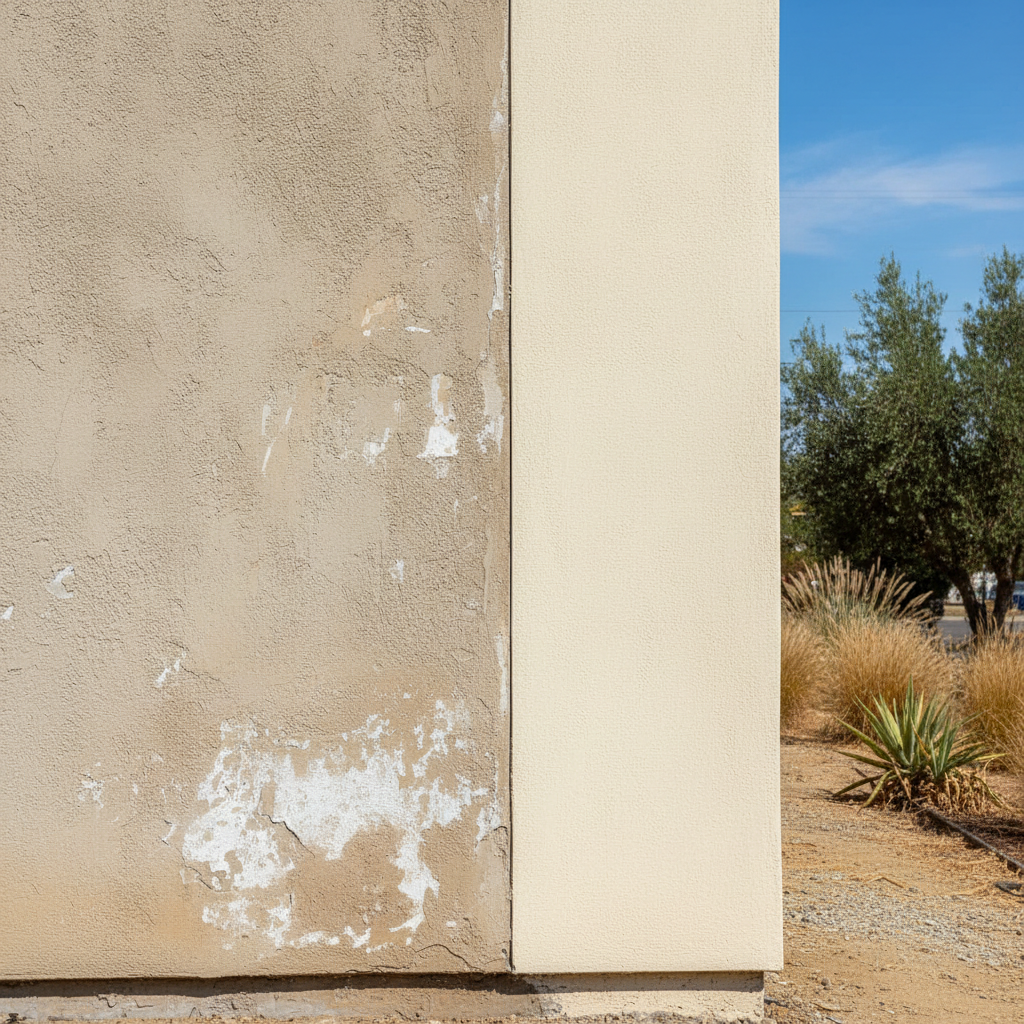
Alright, you're thinking about new stucco for your house here in North Hollywood. Maybe you're building something new, or perhaps you're finally ready to ditch that old, cracked finish. Good for you! But when you start digging into it, you'll inevitably hear about "one-coat" and "three-coat" stucco, and honestly, it can get pretty confusing fast. What's the real difference between them? And which one's actually better for your place?
I've been doing this work for a long time, and I've seen both systems installed beautifully and, well, not so beautifully. Let's just cut through all the sales talk and focus on what really matters to you as a homeowner.
The Old Reliable: Traditional Three-Coat Stucco
This is probably what most people picture when they hear the word "stucco." It's been around forever, and there's a good reason for that. It's a solid system. Here’s a quick rundown of how it usually works:
- Scratch Coat: This is the first layer we put on, right over the lath (which is usually a metal mesh). We scratch it up while it's still wet; that gives the next coat something good to grab onto.
- Brown Coat: A thicker, leveling layer that goes over the scratch coat. This is where we really get the walls perfectly flat and straight.
- Finish Coat: The final layer, which is thinner. This is what gives you the color and texture you picked out — it's what everyone actually sees.
Each of these coats needs time to cure properly before the next one can go on. That's why installation takes a bit longer, you know?
Pros of Three-Coat Stucco:
- Durability: This stuff is seriously tough. With three distinct layers, it forms a very dense, hard shell. It's less likely to get damaged from impacts compared to thinner systems.
- Breathability: Traditional stucco, being cement-based, lets some moisture vapor pass through. This is actually a really big deal in our climate, especially with those sudden downpours we get sometimes, often followed by intense heat. It helps keep moisture from getting trapped inside your wall assembly.
- Repairability: If it does happen to get damaged, it's generally easier to patch and blend repairs with traditional stucco.
- Proven Track Record: It's been used for centuries. We know it works.
Cons of Three-Coat Stucco:
- Cost: Generally, it's more expensive up front. You're looking at more material, more labor, and more time on site.
- Installation Time: Because each coat needs to cure, the project takes longer. You could be looking at several days, sometimes even a week or more, just for the stucco application itself.
- Weight: It's heavier than one-coat. This usually isn't an issue for a well-built structure, but it's definitely something to think about with older homes.
The Modern Contender: One-Coat Stucco
One-coat stucco, sometimes called