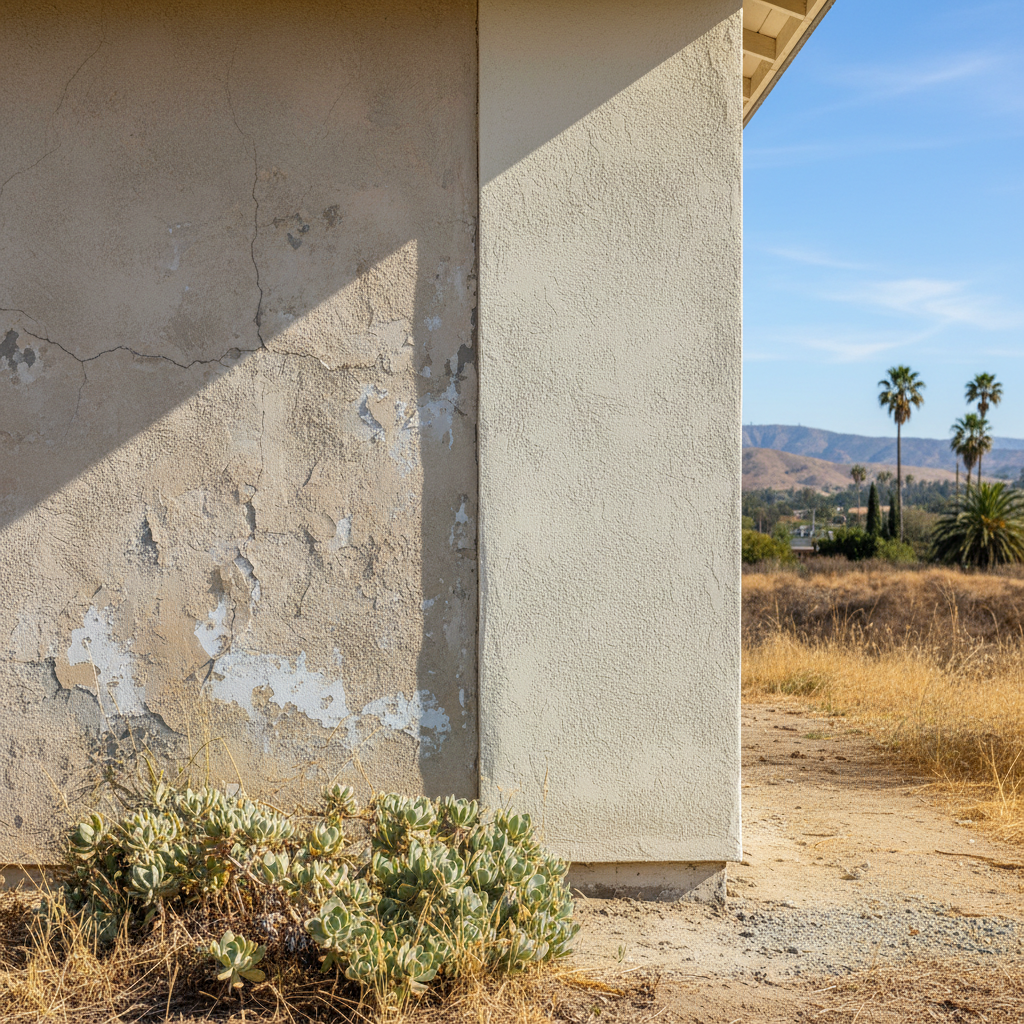
Alright, let's talk stucco. If you're a homeowner here in North Hollywood, chances are you've either got stucco on your place already or you're thinking about adding it. It's a classic look for a reason, you know? But what kind of stucco are we even talking about? Most folks don't realize there are two main types commonly used on homes around here: traditional cement stucco and synthetic stucco, which often goes by the name EIFS (Exterior Insulation and Finish Systems).
I've seen both installed, repaired, and sometimes, sadly, really messed up, all over the Valley. So, let's cut through the jargon and figure out which one makes more sense for your house, shall we?
Traditional Stucco: The Tried-and-True Classic
When I say 'traditional stucco,' I'm talking about the good old cement-based kind. This is what you'll find on most of the older homes in places like Burbank's Magnolia Park section, or even the mid-century ranches right here in NoHo. It's a mix of cement, sand, lime, and water, applied in layers over a wire lath. Typically, it's three coats: a scratch coat, a brown coat, and then the finish coat. That's why you often hear it called 'three-coat stucco.'
Cost & Durability
Upfront, traditional stucco can sometimes take a bit more labor to install. That can mean a slightly higher initial cost compared to some synthetic options, but it's incredibly durable. We're talking about a hard, rigid surface that can really take a beating. It stands up well to impact, fire, and pests. Plus, it's breathable, which is a big deal in our climate. It lets moisture escape, cutting down on the risk of rot or mold behind the walls — super important when we get those heavy winter rains after a long dry spell.
Maintenance & Appearance
Maintaining it is pretty straightforward. Keep it clean, fix cracks when they pop up, and repaint every 10-15 years or so. It's a solid, heavy material, so it tends to hold its color well. The appearance is classic – a hard, masonry finish. You can get different textures, everything from smooth to rough, but it always has that distinct, solid feel to it.
Synthetic Stucco (EIFS): The Modern Alternative
Now, synthetic stucco, or EIFS, is a totally different animal. It's a multi-layered system that starts with an insulation board (usually foam) attached to the exterior sheathing. Then, a base coat with a fiberglass mesh goes over the insulation, followed by a finish coat that's typically acrylic-based. It's lighter and more flexible than traditional stucco, which has its pros and cons.
Cost & Durability
EIFS can sometimes be cheaper to install because it's lighter and goes on faster. It also provides superior insulation, which could mean lower energy bills – a definite plus with our scorching summers. But here's where we need to be careful: durability. While the acrylic finish coat is flexible and resists cracking better than traditional stucco, the system itself is less impact-resistant. A hard hit can dent or puncture the foam insulation underneath. And this is the big one: EIFS is a barrier system. If water gets behind it – maybe through a poorly sealed window, roof flashing, or a crack – it can get trapped, leading to some serious moisture problems, rot, and mold. I've seen some real nightmares from poorly installed EIFS where water just sat there, eating away at the structure. It's not a pretty sight.
Maintenance & Appearance
Maintenance for EIFS is critical. You really need to be vigilant about sealing around openings and repairing any damage right away to prevent water from getting in. The appearance is often smoother and more uniform than traditional stucco. It also comes in a wider range of colors because the finish coat is built right into the system. It can look great, no doubt, but you've got to stay on top of inspections and repairs.
My Recommendation for North Hollywood Homes
Look, I'm not going to beat around the bush. For most homes here in North Hollywood, especially considering our climate and the way our houses are built, I almost always recommend traditional cement stucco.
Why? It comes down to a few key things:
- Breathability: This is huge. Traditional stucco lets your walls breathe. With our temperature swings and occasional heavy rains, you really don't want a system that traps moisture.
- Durability: It's a tougher material, plain and simple. It can handle the wear and tear of everyday life better, and it's less prone to catastrophic failure if it gets a ding.
- Proven Track Record: It's been used successfully in Southern California for a century. We know how it performs, and we know how to fix it when it needs it.
- Moisture Management: While no exterior is completely foolproof, traditional stucco is far more forgiving when it comes to minor imperfections in flashing or sealing. It just handles moisture better than EIFS.
That's not to say EIFS is bad everywhere. In colder, drier climates where insulation is the absolute top priority and moisture isn't as big of an issue, it can be a good choice. But for us, with our specific weather patterns and the way our homes are constructed, the risks associated with EIFS – especially regarding moisture intrusion – often outweigh the benefits.
When you're ready to get some work done, make sure you're talking to someone who really understands the differences and can guide you to the right solution for your specific home. At Synergy Stucco North Hollywood, we always put the long-term health of your home first. You want a system that's going to protect your investment for decades, not just look good for a few years, right?